What makes Stade Toulousain so special? Our special correspondent investigates
by Johnny Lidgate 03 December 2008
|
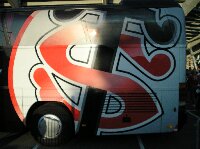
Free-wheeling: Stade Toulouse
|
We at FRC wanted to know just why French giants Stade Toulouse are consistently regarded as the best team in Europe, so we sent special correspondent Johnny Lidgate along to the Ernest-Wallon to find out why. Here's what he thought...
One club stands above all others in European rugby.
They are three-time Heineken Cup champions - a record - and 17-time champions of France, also a record.
They are the Rouges et Noir from the Ville Rose and to the Anglophone ear even their nickname has a certain cachet compared to the sub-American monikers - Force, anyone? - of say, the Super 14.
I write, of course, of French aristocrats Stade Toulousain.
The city of Toulouse nestles in the heart of French rugby's heartland, the south west of the country.
For all the game's inexorable move towards dominance by big city clubs, around half of the clubs in France's top two divisions remain small-town outfits from "La France Profonde".
The likes of Dax, Mont-de-Marsan, Agen and Auch are un cheval towns whose obsession with the game enables them to remain just about competitive with wealthy giants such as Paris-based Stade Francais, Clermont Auvergne and Toulouse themselves.
While Dax, a town of little more than 30,000 people, struggle along on a budget of a few million euros, Toulouse is a city of over a million people with a mammoth 20 million plus euros to play with - almost certainly the largest budget in the global game.
Their resources dwarf even those of cashed-up Toulon, for all their glamour signings such as coach Tana Umaga, former All Black Jerry Collins and NRL convert Sonny Bill Williams.
But Toulouse see themselves as about more than just numbers; their success must come with the style that befits a side sometimes labelled the Real Madrid of European rugby (minus the unfortunate Fascist heritage).
They are the arch exponents of what the French call "Le Jeu", and the English admiringly label "French flair".
Make no mistake, any club which has employed Kiwi-Tongan brothers Finau, and the even more massive Isitolo Maka, in their back row is fully aware of the need for power.
But the fluid offloading style they have perfected under veteran coach Guy Noves makes them, at their best, the most thrillingly attractive side in the northern hemisphere.
This aesthetic imperative, so integral to the club, is born out of the city itself, for there are few population centres around the world so thoroughly immersed in rugby union.
When Rafael Benitez, manager of Premier League giants Liverpool, one of the biggest clubs in world sport, took the five-time European champions to Toulouse for a Champions League game against the round-ball Toulouse FC, even he was moved to pay homage, saying "this is a rugby city".
Toulouse itself combines old-world style with cutting edge modernity. The nickname "La Ville Rose" comes from the pink brick which much of the beautiful city is built of.
The Place du Capitole in the city centre is the most impressive square your correspondent has ever seen and the impeccably turned-out inhabitants are so note-perfectly chic it is rapidly apparent that it is not just Parisians who appreciate the importance of style.
Leicester city centre on a Saturday night it is not.
This innate sense of style is matched by the city's status as the centre of the European aerospace and space industries, so taking wing and reaching for the skies is demanded here, hence the crowd's immediate exhortation "Allez! Allez!" every time Stade turn over possession in their own 22 - "Let's go! Let's go!"
The City is also reported to be the fastest growing in western Europe, and driving into Toulouse from the west the scale of road building and other development is astonishing - 30 miles from the city's outskirts entire new motorways are appearing and it is not hard to find echoes of this civic sense of drive and renewal in the club's constant search for excellence.
Incidentally, driving into the city centre from the west you pass through the suburb of Colomiers. The fact that a club from one of the city's suburbs are themselves European champions should tell you all you need to know about the local love of rugby.
For many years, and I suspect like many English rugby fans, French club rugby was out of sight and out of mind.
Sure, the national side would turn up and either combust spectacularly under the none-too-subtle promptings of Brian Moore, or counter-attack from behind their own posts and have you on your feet applauding despite yourselves, but it was the advent of the Heineken Cup which piqued my interest in the club game.
And, for all the Parisian haughtiness and sheer, unabashed pinkness of Stade Francais, or the exoticness of the Basques of Biarritz Olympique or the Catalans of USAP from Perpignan, it was Stade Toulouse that really fired the imagination.
|
Allez, allez! Style is everything
|
I finally made it over this season for a game and despite the burden of expectation the experience was everything you would hope it to be.
Driving up to the neat, modern Stade Ernest-Wallon for the visit of Perpignan - a 19,000 sell out - in the Top 14 we, like every other car passing down the road, were halted by the French equivalents of the open-booted Range Rovers which inhabit the west car park on international days at Twickenham.
The mixed-Toulouse and Perpignan party thrust an artificial goatskin wine container through the window and charmingly demanded we drink our share of the sticky Catalan fortified win - no escape for the driver either - and that set the tone for the day.
Outside the ground the hotdog vans sell delicious saucisse de Toulouse, a cut above the sphincter-and-gristle-dogs you find in England, and as the sun beat down Toulouse and Perpignan gave it a lash.
Maxime Medard, the latest dazzling talent off the Toulouse academy conveyor belt, demonstrated why he is destined for the French national side, former All Black scrum-half Byron Kelleher showed why he was Top 14 player of the year last season and France winger Cedric Heymans cut a line so precise to score with his first touch after coming on as a replacement it could have been drawn by one of the designers down the road at the French Space Agency.
Drums were pounded at either end of the ground, flags were waved with a panache Boris Johnson could have done with at the Olympic changeover in Beijing and the queue for a beer after the game confirmed that the oldest stereotype of all - that the French smell a little, shall we say... tangy - is true after all.
The following week Stade attracted 38,000 to the Stade Municipal for the visit of Bath in the Heineken Cup, so in addition to their status as the richest and most successful club in the northern hemisphere, they can probably claim to be the best supported as well, for all the marketing genius of Stade Francais owner Max Guazzini in Paris.
And that brings us back to the beginning, for in France when you say Stade it refers to only one club, and it is most certainly not the Parisian pretenders.
For in France, and in Europe, one club stands apart - Stade Toulousain. Allez, allez!
|